

Woot!
We got your request. Hang on tight and we'll get back to you!
 Assessment Management
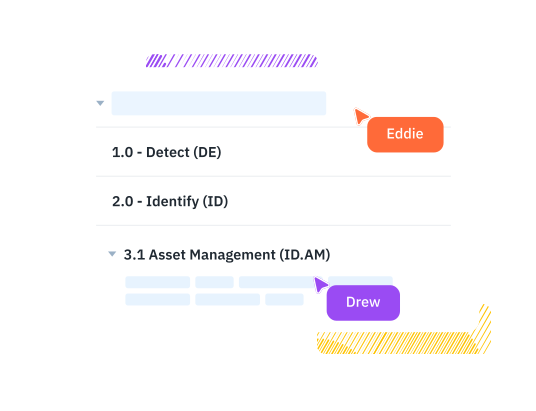
Run structured security assessments across systems, teams, and vendors—all from one place.
Assessment Management
Run structured security assessments across systems, teams, and vendors—all from one place.
 Questionnaires & Surveys
Launch structured questionnaires and collect evidence from the people closest to each control.
Questionnaires & Surveys
Launch structured questionnaires and collect evidence from the people closest to each control.
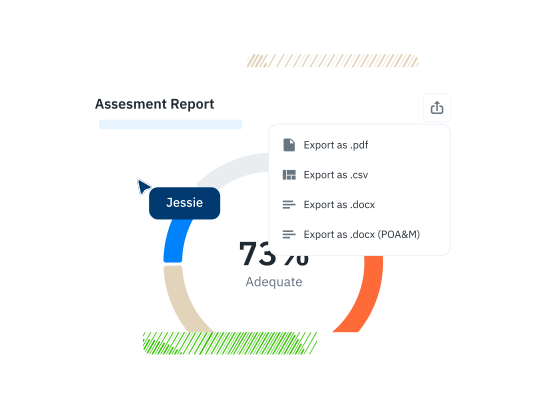
 Reports & Scorecards
Turn assessments into audit-ready reports and actionable insights your team can actually use.
Reports & Scorecards
Turn assessments into audit-ready reports and actionable insights your team can actually use.
 Inventory Management
Maintain a connected inventory of vendors, assets, and systems linked to assessments and risks.
Inventory Management
Maintain a connected inventory of vendors, assets, and systems linked to assessments and risks.
 Exception Management
Log, track, and resolve policy exceptions so nothing falls through the cracks during audits.
Exception Management
Log, track, and resolve policy exceptions so nothing falls through the cracks during audits.
 Risk Management
Turn assessment findings into a living risk register with owners, remediation plans, and full lineage.
Risk Management
Turn assessment findings into a living risk register with owners, remediation plans, and full lineage.
 Information Security Risk Management (ISRM)
Run assessments across units and systems, maintain IT asset inventories, and collaborate on a shared risk register—all in one place.
Information Security Risk Management (ISRM)
Run assessments across units and systems, maintain IT asset inventories, and collaborate on a shared risk register—all in one place.
 Third-Party Security Risk Management (TPSRM)
Track vendors, send security questionnaires, and manage third-party risk with built-in workflows and a centralized inventory.
Third-Party Security Risk Management (TPSRM)
Track vendors, send security questionnaires, and manage third-party risk with built-in workflows and a centralized inventory.






































Upload an existing vendor-completed HECVAT spreadsheet, map answers to questions, and compute scores automatically. Or, distribute HECVAT questionnaires directly and track completion, without following up over email.
Connect each vendor record to every HECVAT assessment, product deployment, data classification, contract, contact, and risk rating. When procurement needs a status, the assessment history, current risk posture, and supporting documentation are already connected. Search by service type, data sensitivity, or organizational unit instead of digging through a shared drive.
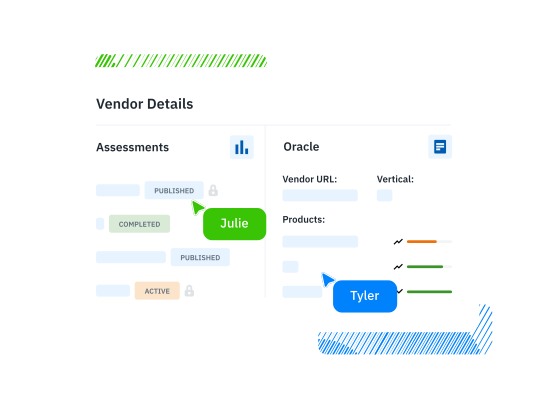
Publish gaps to the risk register as they surface in HECVAT responses, with full lineage back to the question that flagged it, the vendor and product it applies to, and the data classification at stake. Assign owners, set remediation deadlines, and document exceptions.
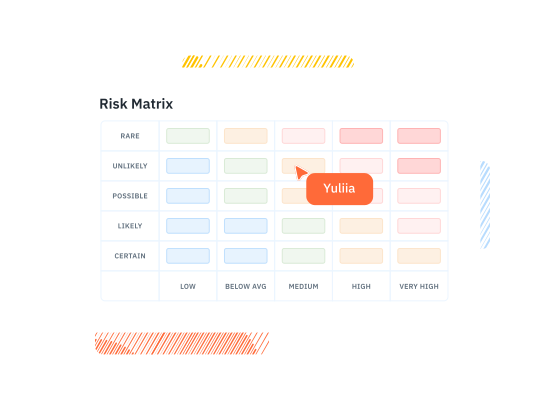
Generate live scorecards for HECVAT completion rates, control gaps, and risk ratings by vendor, product, or organizational unit, and export reports for procurement committees, IT governance boards, and leadership. Standardized scoring across every reviewer keeps approval and rejection decisions consistent and auditable.